Have a question from the book or a post on this blog? Feel free to ask a Tao question, especially about cultivating well-being and longevity.
For private questions-email: thedixietaoist@gmail.com
Have a question from the book or a post on this blog? Feel free to ask a Tao question, especially about cultivating well-being and longevity.
For private questions-email: thedixietaoist@gmail.com

What is your idea of self-care? Is it binge-watching TV after a hard day? Is it eating “high calorie, low nutrition junk food after a long day of drama? Maybe, if you are lucky, you realize it’s not the right path and are searching for answers. Chapter 33 in the book discusses this important lifestyle routine to stay on the better, enjoy life, and stay on the longevity path.
There are many chapters on bringing about harmony, the foundation for well-being. The Tao Te Ching has many lessons for avoiding the things that cause stress, drama, anxiety, and the seduction of desire (ego). Five sections of The Tao of Longevity book will guide you in understanding how to take care of your “self” along your life’s journey and avoid the suffering brought about by following the path of distraction being dominated by the ego (self).
Meditation is the highest level of self-care because it is the means of transcending the distracted state in which we make our worst choices. Bad choices, often made while coping and distracted, have the karmic effect of evolving into a state of suffering, which is the opposite of well-being. Self-care is the action of preventing, restoring, and maintaining a high state of harmony and balance through the everyday choices we all make each day. So many of us are necessarily distracted and do not even notice what we are doing and what impact it will have on life, so it is important to wake up and pay attention to what we are doing and why. This is the function of meditation and mindfulness.
Once you are “self-aware,” you can head off the not-smart choices and choose things that will bring about the conditions for feeling really good as a normal state of being.
So…how well are you taking care of your “self”? Ready to take charge of your life path and find that place where you honestly feel and think “life is good”?
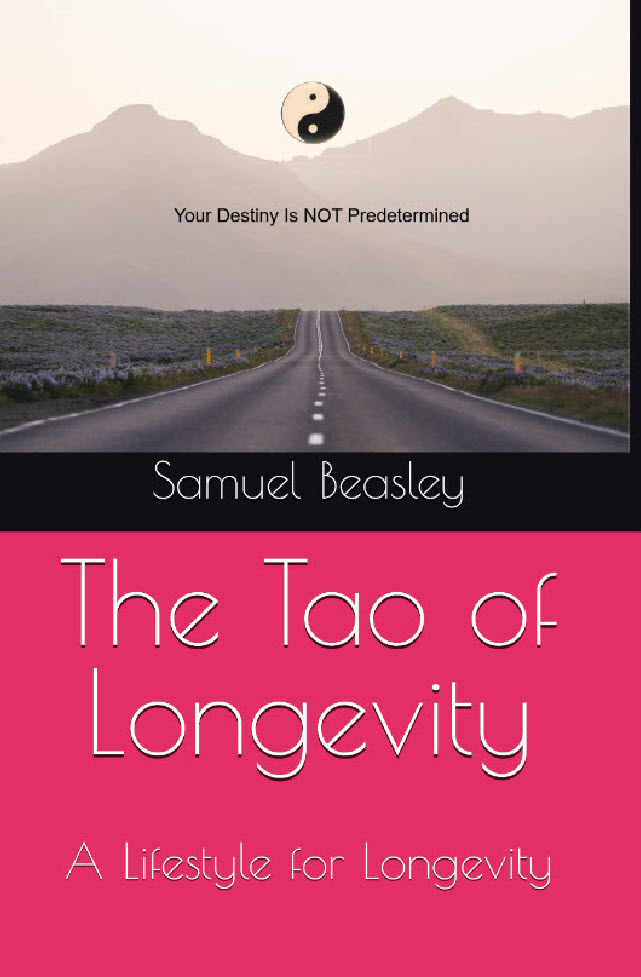
Kindle Ebook: https://www.amazon.com/dp/B0CL2JDWDQ
Paperback: https://www.amazon.com/dp/B0CKZD171M

Contentment is a powerful sentiment, one that leads to longevity.
My Tao journey has revealed just how powerful Tao virtues are. To some people, terms of virtue don’t carry much weight. They can be viewed as a sort of sentiment or suggestion for moral behaviors. In this blog post, I will show another perspective, one which will reveal the deep-abiding power of contentment.
First, an introduction to Virtue as a Tap Principle. The paradigm shift happens when you suddenly see something you have not seen before. It can seem like magic, but it is simply Tao. Virtue is much more than a sentimental or moral term. Once you see its function, it becomes clear.
Here is an example of what I mean. Consider the phrase:
“The people deeply loved her because of her service to the poor people in her village.”
Notice the phrase “because of.” This woman gained love and affection from her village because of devotion and compassion. The virtue of compassion, of devotion, has a cause and effect of becoming loved by those who appreciate it. People can look on this type of thing as someone who is giving themselves for the betterment of others. Compassion is the first virtue that comes to my mind. But with further thought, other virtues are present too. Filling this kind of role in society must surely require the virtue of patience, kindness, conservation, and humility.
Then there is the virtue of Contentment. Let’s use ‘the because test’ to see if the power will reveal itself.
“When asked, the woman said the secret to her longevity was being content with her life. Because of her contentment, the woman experienced harmony and longevity.”
Being able to live a long life of contentment is one of the secrets to longevity. Contentment is experienced when life is a good balance. Harmony is a catalyst for nurturing the flame of life. Contentment and harmony create vitality, the quality-of-life force energy. The healthier this vital energy is, the more you will enjoy life and the longer you will continue to live.
How do you feel about seeking contentment? Does it appeal to you? Or is there some part of you that is just too hungry for stimulation or that you just can’t see yourself just letting go and living a simple life? I hope you will take a few moments to think about it sometime. You may conclude that all the stuff you do is because, deep down inside, it is contentment that you are seeking. Lasting contentment is not found in the material sense as much as it is in the spiritual sense. Dealing with that need is at the heart of the matter. When you uncover your deeper feelings you can begin the process of letting go and simplifying your life. A simple life is one where you are not creating an unnecessary burden to carry. Look at the part of you that is feeling that needy longing. When you can see that, ask yourself who it is that is witnessing that emotion. Notice the detachment. This is something you can cultivate with practice. It is the epicenter of mindfulness, something you can cultivate.
For me, Contentment was something that I had to cultivate over a long period of time. Had I known now how good it is, I would have embraced it a lot earlier. Ego-Desire management is not easy. The hard part is cultivating willpower and ‘self’-discipline.
Personally, I cannot help but wonder why everyone doesn’t try to become content with life and just simply enjoy being alive. The answer, I believe, is that too many are lost to the distraction of modern society. I discuss this and the vital energy Qi in the book. There you will get a bigger, more detailed picture of the power of virtue and harmony.
Being able to wake up from this distraction is “the big thing” you must work on when trying to get on the path to longevity. In the book, I talk about the process of waking up, transcending the ego mind and finding the virtue of Sovereignty. Sovereignty is another powerful virtue. I started a blog and wrote a book devoted to sovereignty. You can visit The Tao of Sovereignty website here.

Virtue in popular culture can be defined as a word that describes the quality of good behavior and morality. Taoism has much deeper meanings that carry the power to determine your destiny. Tao cultivators work diligently to “accumulate virtue.”
Submitting early is called emphasis on accumulating virtues
Accumulating virtues means there is nothing one cannot accomplish
Verses 4-5, Chapter 59, Tao Te Ching
When I first saw these verses, I immediately wondered what “accumulating virtues” meant. And the phrase “there is nothing one cannot accomplish” really got my attention. The statement implies that by accumulating virtue, Longevity becomes possible. Remember Lao Tzu’s promise that:
They have no determined outcome.
Who knows their ultimate outcome?
Verses 7-8, Chapter 58, Tao Te Ching
You can see that the Tao principle of Virtue plays a key role in cultivating Longevity as well as other areas of life.
The word Inherent is defined as something that is embedded in something and not easily displaced. In the verse from Chapter 59 above, “submitting early is called emphasis on accumulating virtues”, which means one should begin accumulating virtue as soon as possible so that it becomes deeply rooted or embedded in your psyche or second nature. The inherent power of virtue can be understood by examining the phrase “by virtue of”, or by stating “because of” before a successful accomplishment. Examples:
“By virtue of her patience and self-discipline, she was able to lose 100 pounds.”
“Because of his reputation for honesty, he was able to gain the trust and respect of the team, so that victory was at hand.”
In the first example, because of the virtues of patience and self-discipline, she was able to be successful in losing weight and achieving a weight goal. By accumulating patience and self-discipline, their power became her inherent power, or embedded and not easily lost.
In the second example, by virtue of his reputation for honesty, he gained the respect of his team members so that his team trusted his leadership and followed his guidance so that victory was the result.
In every waking moment of every day, we all make choices that determine our future. When we want to achieve success, we must make choices and take actions that will achieve our goals. Causation is the initiating action that will end with a result. The principle works for both the tangible and the intangible.
Tangible: Think of seeds being planted in a garden. To grow a garden, you must plant the seeds for the plants you want to harvest. Causation is the planting of seeds; Effect is the reaping of fruit from the plant when it has matured. The action of planting seeds results in the growing of food. This is the cause and effect utilized for growing plants.
Intangible: Cultivating and accumulating Virtue is action or causation that will result in success, as in the examples above. Cultivating the virtues of patience and discipline results in losing weight. Cultivating honesty results in a reputation that team members trust and follow.
Your current life situation is a result of cause and effect from the past. The choices you make and the actions you take have resulted in what you are experiencing in the present moment. Because of the inherent power of virtue, the choices and actions you take for longevity will have the greatest chance of success. Therefore, you should practice cultivating virtue because your future and longevity depend directly upon it. While it is true that there are circumstances that happen that are out of your control, how you react to the inevitable obstacles and challenges in life will affect your future.
There are many different virtues to learn and cultivate that will enhance your ability to succeed in life. It is not hard to see virtues, yet it can be challenging to implement them. This is because virtue tends to not be an aspect of the desire-seeking ego mind. When I looked up what the opposite of virtue was online, the list was:
These are all immoral descriptions, which are qualities of the Ego mind. But rather than see Virtue as moral, try to see its inherent power for cultivating a long, successful life. Here is a brief list of Virtues to consider:
Now, try visualizing the practice of these virtues in everyday life. Think of the success you have had and consider how they helped you. Specifically, think of how practicing some of these virtues can create a destiny of Longevity. Remember, your destiny is created in each choice you make, so if your Longevity goals are to lose weight, exercise more, lower your blood pressure, or avoid toxic foods, what virtues must you practice to achieve it.
To accumulate a virtue means that you have practiced it so many times that it has become second nature. You don’t have to think about using them when you make your life choices.
Accumulating virtues means there is nothing one cannot accomplish
If you want to prevent or cure disease, work on accumulating virtue and harness the mystic power of virtue. This is the Tao of Virtue.
Summary: To Cultivate a Successful Destiny, Integrate virtue into your life.
[1] See Chapter 67, Tao Te Ching: “I have three treasures, I hold on to them and protect them.”
[2] See the Chapter “True Courage” Chapter 16, “in my book Sovereignty – The Tao Principle of Self-Management,
 The Tao of Longevity