How to Use the Tao as a Tool for Longevity

And All Other Areas of life.

The Tao is empty; when utilized, it is not filled up So deep! It seems to be the source of all things.

V1&2, Chap 4, Tao Te Ching

During a recent Tao lesson on Chapter 4 by Derek Lin, he said something that is good advice for Tao cultivators who are always looking for ways to implement Tao practice for success in life. He was discussing verse one, which is Lao Tzu’s explanation that the Tao is empty but unlimited. Derek used our universe, space, as an example. Space goes on infinitely, without end and without limits. In this line, Lao Tzu is describing it as if it were a vessel that, no matter how much is poured into it, it is never filled up. He uses the ancient word for “use it,” in which the modern context is worded as “utilized.” Thus, the suggestion is to use it (the Tao) as a tool to be used. Derek explains that the more you use the Tao, the better life becomes. The rest of the chapter is about applying the Tao in life. If you read it without explanation, it very well may not make sense, so I encourage you to watch the video as Derek unpacks the deeper meaning of this ancient wisdom. Once you have heard the entire lesson, you will see why Lao Tzu says, “So Deep! It seems to be the source of all things.

So, after hearing this lesson, I began to think about the concept of using the Tao as a tool. And more specifically, how does one use the Tao daily to succeed, thrive, and survive? How would Tao cultivators use the Tao for Longevity goals? What are some Tao lessons that would apply?

To begin with, one has to learn to awaken and be present. Being present includes mindfulness. You must be self-aware and consciously recognize the moment of choice at hand and then be able to consider how to apply the Tao to that situation.

Yet, as I found out, just being aware is not enough by itself. One must learn the spiritual lessons or Tao lessons that can be mindfully applied. By studying the Tao, you will have the lessons at hand to apply when the opportunity arises.

This brings about the question of what Tao lesson should you learn? My answer is that you can start with a problem or question you may have right now in your life. What is something you are trying to deal with? What is a situation where you really need to make the right choice and be able to follow the right path forward to good place in the future? If you have studied the Tao, you might know right off what the Tao would recommend. Others of you may not know in the beginning where to start. Your journey begins by searching for the answers and lessons on your own. Perhaps in one of my books, you will see something that resonates. A good start would be listening to a lecture such as the one listed above. Over time, you will pick up lots of interconnected wisdom.

Longevity Challenges

How would a Tao cultivator deal with some of the current challenges our world faces today?

We can start close to home with our wallets. Most people right now, November 2023, are coming face to face with the cost of living becoming a challenge. Everything is expensive right now. Trying to avoid becoming homeless is harder and harder. So, as a Tao cultivator, I can see two complementary perspectives. The first is prevention, and the second is conservation. Like all Tao virtues, these two can appear to be just “feel good” cliches with little practical value. But Tao cultivators recognize their power.

Prevention is something many people could put more emphasis on. Yet you should also see that prevention is easier applied if one has also been practicing conservation. From a financial perspective, conservation would be to mindfully manage limited money resources so that they go as far as possible. It is hard to enact prevention from a state of lacking resources. But once the action of conservation has taken effect, resources will stay available. From an awakened state, steps can be taken to avoid unnecessary spending. Having enough financial resources to live a comfortable life in all circumstances is the goal of the Tao cultivator.

  • Keep this lesson simple.
  • Wake up.
  • Pay attention to desire.
  • Use discipline to refrain from making useless expenditures.

It’s not complicated, but in the beginning, it can be hard do to. So start small and be consistent. Cultivate mindfulness so that you can be awake and aware of what you are doing and why.

What did Lao Tzu think about conservation? He listed it as one of “three treasures” that he held a very important. You can learn more about the lesson of The Three Treasures here.

…I have three treasures
I hold on to them and protect them.
The first is called compassion.
The second is called conservation
The third is called not daring to be ahead in the world..

Verses 7-11, Chapter 67, Tao Te Ching

A Tao Tool for Conserving Financial Resources

Conservation, the second treasure, is to take care of what you have. Regarding financial resources and the ability to create wealth, one should take great care not to waste them. In my book, Sovereignty, I discuss at great length how the ego, if left unmanaged, causes great self-harm.

So, one must be awake and present to make wise choices for well-being. At the root of ego waste is the anti-virtue of desire. Managing desire is part of the process of self-discipline. Self-discipline, controlling the ego self, is applying the Tao in life. When the ego is controlled, you are aware of it, yet have no trouble asking yourself in the moment of choice, is this a want or a need? Too many choices where you give into want or false need will unnecessarily waste financial resources. As someone who knows first hand, this directly affects quality of life.

A lot is riding on being on sound financial footing. Sometimes, life becomes hard through no fault of our own. Yet the opportunity will come when you can do something constructive to improve your situation. At that moment, it is important to know what to do. That is when the Tao lesson will come into play. In a moment of clarity, you will ask:

  • Do I save that money, or do I give in to my ego?
  • Will this take me further from or closer to financial stability?
  • Is this something ego wants, or do I really need this? (be honest!)

Health and Fitness

Once you learn the virtue of conservation and apply it daily without even thinking about it, you will have a Tao skill to “hold it and protect it.” This same Tao tool, conservation, is a principle that should be applied to other areas of life, such as Health and Fitness, which require the same spirit of conservation. With diet, it is the quantity and quality of nutrition. Can you be conservative with your nutrition and avoid those things that negatively affect your health? Overindulgence and poor nutrition quality can quickly erode Longevity. Conservation applied to lifestyle in the form of eating can keep you on the path to good health, which is arguably necessary for Longevity.

With Fitness, it will mean learning to conserve energy through a balance of rest and exercise. Lots of this is discussed in the Tao of Longevity Book. See the section on The Longevity Protocol. Good Fitness is a state of harmony derived through a balance of physical activities with its complementary opposite of rest and sleep. Conservation protects this balance and the sense of Harmony that can be a game changer in the way you feel. In this way, a Tao cultivator uses the tool of conservation to manage various aspects of life and lifestyle to achieve the highest success.

“So deep! It seems to be the source of all things.”

The action of conservation is a Tao tool. To really see its “deep” effects, you must use it in all aspects of life. I have found firsthand that it works. Now that you see that Tao lessons are tools to achieve success in life try seeing how you can use other lessons/tools to help you navigate life for the long haul. See out other Tao lessons, get to know how they work, and try them in everyday situations in life.

Don’t Forget Karma

Don’t forget the actionable creative force in the Tao known as Karma, or cause and effect. Every choice and every decision are seeds planted in each moment that will grow and mature into a future state of experience. So, in each moment, plant the seeds of virtue so that you will end up in a better place down the road. With this in mind, consider the other two treasures that Lao Tzu holds dear and holds onto: Compassion and Humility which are Tao lessons in themselves. Just know that these are powerful life-changing tools to cultivate a better life if you use them effectively.

All the blog posts in this blog are lessons that are tools to be used by a person cultivating the Tao. When you read about a different lesson, try to think of how they, too, can be used as tools for Longevity. You might also explore the other book blog for other Tao lessons regarding spiritual self-discipline. The Tao of Sovereignty Blog.
Self-Care

Self-Care: Devotion to longevity through regular steps to restore and preserve well-being both internally and externally.

What is your idea of self-care? Is it binge-watching TV after a hard day? Is it eating “high calorie, low nutrition junk food after a long day of drama? Maybe, if you are lucky, you realize it’s not the right path and are searching for answers. Chapter 33 in the book discusses this important lifestyle routine to stay on the better, enjoy life, and stay on the longevity path.

There are many chapters on bringing about harmony, the foundation for well-being. The Tao Te Ching has many lessons for avoiding the things that cause stress, drama, anxiety, and the seduction of desire (ego). Five sections of The Tao of Longevity book will guide you in understanding how to take care of your “self” along your life’s journey and avoid the suffering brought about by following the path of distraction being dominated by the ego (self).

Meditation is the highest level of self-care because it is the means of transcending the distracted state in which we make our worst choices. Bad choices, often made while coping and distracted, have the karmic effect of evolving into a state of suffering, which is the opposite of well-being. Self-care is the action of preventing, restoring, and maintaining a high state of harmony and balance through the everyday choices we all make each day. So many of us are necessarily distracted and do not even notice what we are doing and what impact it will have on life, so it is important to wake up and pay attention to what we are doing and why. This is the function of meditation and mindfulness.

Once you are “self-aware,” you can head off the not-smart choices and choose things that will bring about the conditions for feeling really good as a normal state of being.

So…how well are you taking care of your “self”? Ready to take charge of your life path and find that place where you honestly feel and think “life is good”?

Kindle Ebook: https://www.amazon.com/dp/B0CL2JDWDQ

Paperback: https://www.amazon.com/dp/B0CKZD171M

A Small Country

The Tao of Simple Living

From Chapter 80 – The Small Country

  • A small community is a good place to live, one where the citizens are content and do not wish to leave.
  • They are fully prepared to defend themselves yet avoid leaving their lands to get involved in unnecessary conflicts.
  • Small communities can be self-sufficient and are not dependent on outside resources. They take care of themselves.
  • Small communities offer a simple life that harmonizes Longevity.
  • Small communities are filled with neighbors, friends, and family members who support one another on many levels.
  • The Small Country Principle is alive and well in the modern world and they are known as  “Blue Zones”

The Blue Zones

A few years ago, I discovered a book that helped to sharpen my focus on Longevity. I started reading articles about people turning one hundred years old and how they were able to live so long. Eventually, my curiosity led me to a book titled “The Blue Zones” authored by a man named Dan Buettner.

Dan Buettner, National Geographic Explorer, and author of “The Blue Zones, Lessons for Living Longer from the People Who’ve Lived the Longest” discovered five special places around the world where people live longer than average. With higher numbers of centenarians, these communities were called “Blue Zone” and become famous for their simple but powerful lifestyle practices.

One of the key traits these groups had in common was that they held a strong sense of community. Within this strong sense of community, they lived and shared close relationships with friends and family nearby. While listening to the lecture on Chapter 80, I was reminded of this, and close it follows the Tao and how it reflects the lessons of small communities living simple yet happy content lives. This seems to be one of the secrets to living to one hundred years old.

Chapter 80, of the Tao Te Ching, is called “A Small Country”. When you read the verse below, remember much of the translation uses metaphors. “A Small Country” is a metaphor for a small group, small town, or small community”.  Taoist principles adhere to a smaller simpler way of life. Specifically, Lao Tzu is talking about living a simple life in a small town. In modern times, ‘’a small country’’ can be not only a small town, but being part of a community, subdivision, neighborhood, or village.  Read the verses below and I will explain how and why this can be an important aspect of a Lifestyle for Longevity. The context is life in a small-knit community and how they thrive.

Small country, few people

Let them have many weapons but not use them

Let the people regard death seriously

And not migrate far away

Although they have boats and chariots

They have no need to take them

Although they have armors and weapons

They have no need to display them

Let the people return to tying knots and using them

Savor their food, admire their clothes

Content in their homes, happy in their customs

Neighboring countries see one another

Hear the sounds of roosters and dogs from one another

The people until they grow old and die

Do not go back and forth with one another

We begin with the first three verses:

“Small Country, few people

Let them have many weapons but not use them

Let the people regard death seriously

Chapter 80, Tao Te Ching

In ancient China, the peasant farmers owned weapons, but being Tao cultivators they did not seek to use them. When threatened they stuck together to form a defensive force against aggression. So while they did go out looking for trouble, they could defend themselves with force and make it much harder, less appetizing for those who are looking for an easy target.

Life was hard but good, and these simple people took life and death seriously so they would only fight to defend themselves and then only what is required to survive.

And not migrate far away

Although they have boats and chariots

They do not need to take them

Taking arms to go fight a neighboring land means that they would have to leave home to risk their lives unnecessarily. Their instinct was to stay close and take care of their home. And because they are happy where they live they do not feel a need to leave. Even though they have the means to travel away, ”boats and chariots”, they don’t need to use them for anything other than short trips nearby trade which benefits everyone.

Many things can happen and go wrong when the men would leave their families to go off and fight. Not were trade and farming in neglect, but they could and would get wounded or lose their life on a distant battlefield. This creates a big loss back home when the person who did the work and protected the community was now wounded or dead and unable to contribute.

When life is good, people prefer to keep their wellbeing going which means staying put and not leaving home. Contentment is a powerful sentiment, one that leads to longevity.

Let the people return to tying knots and using them

Savor their food, admire their clothes

Content in their homes, happy in their customs

These three verses form a metaphor lesson of enjoying the simple good life. Knots are a metaphor for the ancient practice of tying knots to remember something. “Tying knots” means finding simple and useful solutions to everyday problems. The wisdom here is to come up with simple effective tools and strategies for accomplishing a task without letting get too complicated. Solve problems the easy way and don’t let yourself lose contentment through too much complexity.

Be content at home staying close and enjoying the simple joys of life in moderation. In the modern age, I can think of various communities that enjoy getting together for fun, relaxation, and food. It’s simple and fun to celebrate traditions such as holiday celebrations, colloquial food celebrated at certain times of the year, and spiritual events. I live down south, so this can mean having collard greens and black-eyed peas for New Year’s. In our house, a family tradition is having Mac-n-Chees at  Thanksgiving. Our family Christmas holiday has its own fun traditions as well as other festive holidays. When I lived in Montgomery, Al, a local quirky custom was that the children would put on their finest Easter dresses but go barefooted to the Church service.  These are all simple meaningful things that local groups, or “small countries” do to enjoy the simple life within their community.

Reading The Blue Zones book I learned that towns and villages in:

  • Sardinia, Italy;
  • Nicoya, Costa Rica;
  • Ikaria, Greece
  • Loma Linda, California, US
  • Okinawa, Japan

All seem to have similar traits in Lao Tzu’s “small country”. They spent most of their lives right in the village where they grew up, eating a simple plant-based diet, tight-knit social groups that help each other out for the collective good of all.

Neighboring countries see one another

Hear the sounds of roosters and dogs from one another

When people are content with their harmonious lifestyle, they know and support other nearby similar communities. Harmony between the individuals of the small town lends itself to harmony with other nearby communities. A kind of intimacy exists where neighbors know each other’s situation on a simple level such as hearing and knowing the sound of your neighbors’ animals (dogs and roosters). Can you imagine waking up in the early morning hours in a village and the first sounds you hear are the people who live around you waking up and coming to life? Everyone gets up with the singular purpose of working to make each other’s lives better. In a small community, the people will know when someone has trouble and can help. They are all interconnected in such a way that working and caring for each other creates a sustaining harmony. This harmony is a powerful virtue for longevity, back then as well as in the modern age. Perhaps I should say, especially in the modern age with so much complex social distraction at large.

The people until they grow old and die

Do not go back and forth with one another

The people live their lives, from birth to death in harmony with each other. They nurture familial, communal, and social harmony by avoiding egocentric drama while practicing mutual caring for the community.

This chapter is not just about the higher quality of small community living but also and especially about the longevity that comes forth from living the simple life.

Summary:

  • The ideal place to spend a life is a place small enough that one can get to know intimately, including the people, the land, and nature.
  • Even though there are plenty of means to leave home, they don’t feel the need to leave because they are content, fulfilled, and happy.
  • Small towns are prepared for emergencies and can defend themselves, they do not dwell on conflict.
  • They use simple solutions to correct problems, avoiding complexity. They don’t overthink, overcook, over spice and stick to the wisdom and customs that have maintained harmony for generations.
  • They stay engaged with each other so they can care for each other to maintain the whole. They are close enough to realize when a neighbor or friend needs assistance, or when they need help, others will know and come to help out. In this way, harmony is maintained and life proceeds without unnecessary stress.

Ego Depletion

Ego Depletion is what erodes willpower and self-control. It is also called Ego Fatigue. Even for those who cultivate self-awareness and Sovereignty, ego depletion is always something to deal with. Ego depletion is the drawing down of your energy from having to constantly manage and restrain the ego tendencies. The ego’s reactive element leads to stress. The constant reaction leads to constant stress. Constantly reacting emotionally to life’s daily dramas and worries uses up a lot of energy. We all know how tired we are after a stressful day of worry, anxiety, and strife. When you become tired, you do not have enough energy to keep the ego from taking over and making bad choices.  It is at this point of fatigue that we lose the battle with self-discipline and break the rules that we have set for ourselves.  When we are tired and out of energy, we give in and let the ego satiate its desire. A modern analogy might be to compare your body’s energy level to a cell phone battery. When too many apps on the phone are working at once, the battery drains much faster. At some point, it must be recharged. Limiting how many apps are running is akin to limiting mind activity and resting it periodically such as short meditations and mental breaks.  Once distracted we don’t even notice our slide out of sanity and into the ego reactive mode. Ego fatigue erodes our ability to stick to the path, achieve goals, and do what we promised ourselves that we do or not do. So, what is the solution?

Until the time that you become fully enlightened and are no longer subject to ego temptation, which most of us are not, you must work on being aware and managing your energy reserves. Physical energy, or vitality, plays a big role in being able to remain detached and stay in charge of your inner kingdom. Spiritual energy and emotions are also important to maintain so that you do not become too fatigued to say no to your desire. Meditation and mindfulness are skills that allow you to be awake and aware of reactions and give you the chance to not get sucked into the trap of ego depletion by being less reactive. By staying ahead of these emotional energy-draining reactions, you can conserve energy, remain detached, stay relaxed and make smarter decisions.

Most importantly, there are situations and circumstances where your wisdom mind knows the danger of letting desire control decision-making. You can become aware of ego traps. Part of you knows better than to do “it” but the ego takes advantage of a tired spirit and takes over. The wise and rational mind knows that making a bad choice will have negative consequences but without the energy to dominate the ego, the trap gets sprung, and karma (cause and effect) delivers the result. In everyday life, there are many traps awaiting the ego, so one must be vigilant in not falling into one through being too tired to do the right thing.

  • Take a moment to think about a recent stressful day when you were tired and worn out. An example might be when you had a tough day at work and came home to indulge in food and drink that causes harm to the body. Sometimes we can get too tired to care and just give in to desire. That is the moment you have become too depleted to manage your ego and restrain your “self” from doing something unhealthy.
  • Think of ways to rest your mind and restore your energy during the day so that you are not depleted. Find moments where you can just stop and rest. Find moments where you can bring yourself present and self-aware so that you know that you are becoming depleted and losing resolve.

Now that you know why you get grumpy or grouchy at the end of the day, you can learn to become aware of your energy level and manage it so that you don’t have an ego fail and fall into one of the traps.

This article is an excerpt from the soon-to-be-published book, The Tao of Longevity, Chapter 37, Seven Ego Traps for a Toxic Lifestyle.


.

Physical Longevity Is a Reflection of Spiritual Longevity

“The Tao of Longevity and Lasting Vision”

Acumulating virtues, means there is nothing one cannot overcome

When there is nothing that one cannot overcome,

One’s limits are unknown.

The limits being unknown, one can possess Sovereignty.

With this mother principle of power, one can be everlasting.

This is called deep roots and firm foundation.

The Tao of Longevity and Lasting Vision

Longevity is a topic that is becoming more prevalent these days, with fitness a $96 billion dollar industry worldwide. This may be driven by the collective ego of people who simply want to look good for everyone else. Yet there are plenty of people who are sick with chronic diseases who simply want to live longer and experience contentment. This is the group that I hope to offer assistance to. So rather than focus just on physical longevity, The Tao (the way, the path) of Longevity begins with Spiritual Longevity.

What is Spiritual Longevity? Like many spiritual traditions, Tao Cultivators understand that there is much more than just the physical aspect of “self”. For those who believe in reincarnation, there is a never-ending cycle of life and death in which the spirit experiences many lives. Too often these lives are filled with suffering and misery through no fault of their own. Yet in this modern age, there is a lot of suffering that people cause for themselves. The glaring question is why we as a society, especially Western Society, do this to ourselves.

Six in ten Americans live with at least one chronic disease, like heart disease and strokecancer, or diabetes. These and other chronic diseases are the leading causes of death and disability in America, and they are also a leading driver of health care costs.

Source: CDC (Center for Disease Control)

The answer I believe lies within. Too many people are dominated by ego-driving desires and distractions living in a waking dream of always striving for more. According to the CDC, six out of ten people cause themselves to be chronically ill, a category of self-caused suffering. The course of action to stop this destructive behavior is learning to control themselves. Or more specifically learning to control ego and desire. One must learn to wake up and become conscious and aware of what they are doing and why. The becomes the foundation of “self” discipline, where “self” is binary. The ego-self must be controlled by the spiritual self, also known as the “True Self”. This is the intent and purpose of spiritual cultivation which is internal. So before a person cannot effectively work on physical longevity, they must first awaken and cultivate spiritual longevity.

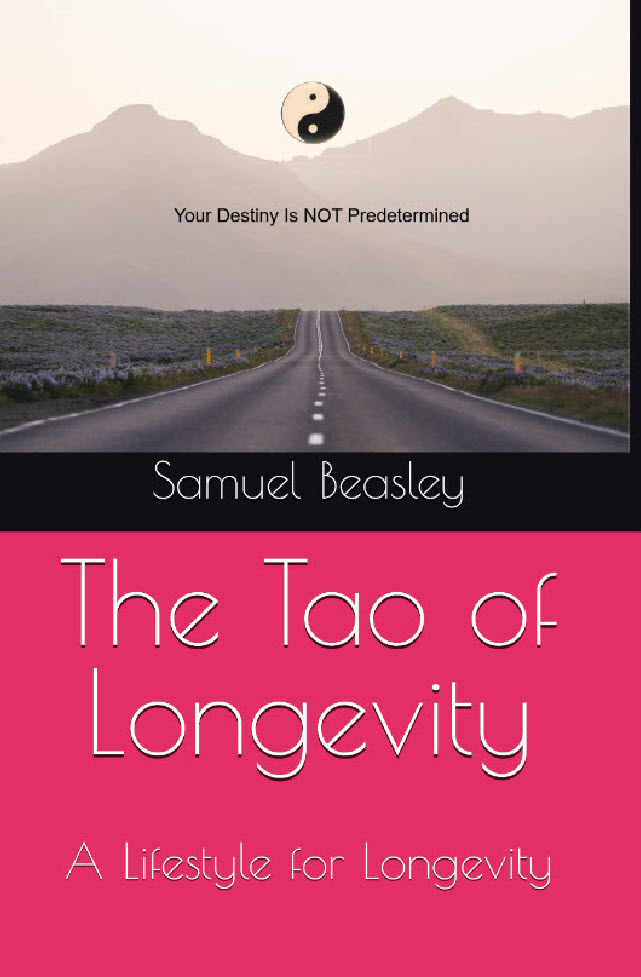
Your Destiny Is Not Predetermined

The sub-title to the new book and this blog, “Your Destiny Is Not Predermined”, means that you do not have to end up one of the 6 in 10 people who developed a chronic disease and die before you should. If you truly want to have a long successful life, you can become the sovereign ruler over your physical life and manage the ego so that the choices you make lead to a much better destiny. We make choices every moment of every day that creates our future. When we are awake and aware, consciously choosing those actions that are right, and promoting harmony, physical longevity will follow.

What is meant by waking up and paying attention? Most people who have not trained in mediation, do not comprehend just how distracted they are. Their busy minds are inundated with too much activity, stress, and drama. Their mindstream can be like a mountain river after a flash flood; out of control. Meditation is the state of being where the spirit, also considered to be the “observer” remains detached and awake, not lost in the incessant stream of thoughts and emotions. This is covered in detail in the book. Once awakened, the higher self becomes the Sovereign ruling life through wisdom and experience, avoiding the ego traps that cause suffering. This state of being is known as “self-awareness”. Once awake and aware, the observing true self (spirit) can pay attention to the mind and guard against ego takeover without being reactive to it. Through stillness, desire is dispelled and the ego becomes distant.

The term “Tao Cultivator” simply means one who cultivates the way. It is the way of reality, the way of living successfully, and with harmony in world around us. Harmony, as you will learn in the book, is no small thing. It is a powerful virtue, that through the cause and effect of Karma, turns the choices you make into the destiny of wellbeing. So if you want to truly have a long successful life, now and in future lifetimes, cultivate spiritual longevity and the physical will follow. Karmic affinity will follow your lives with the wisdom you attained, so that each time around you can improve and get better. Spiritual longevity is not just about this life, but also about the ones that will follow.

Lifestyle Choices Matter

Every moment of everyday life, you are making choices that affect your destiny and your longevity, and the quality of life you hope to enjoy. Those choices matter a lot.

Sovereignty, the Tao virtue of self-discipline is how you control desire and ego traits that can lead us down the wrong path. The right path, the true path, is before you in every moment of choice.

Examples of Lifestyles That Promote Longevity

Blue Zones.

In November 2005, National Geographic Magazine featured an article titled “Secrets of Long Life”  by Dan Buettner who went on to publish a book titled: Thrive: Finding Happiness the Blue Zones Way. Since then, more books and articles all point to communities worldwide that have shown to have an unusual number of Centenarians and long-life people. The data from his reporting has shown how specific lifestyle choices in these communities significantly affect longevity. Another interesting note is that some things that contribute to longevity are not what you would not expect

China.

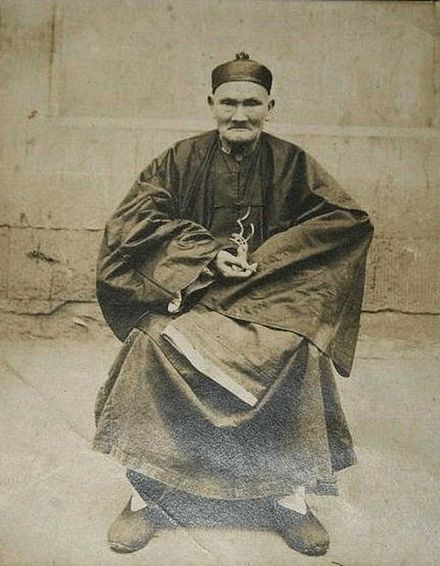
In 1677, a man named Li Ching-Yuen was born Sichuan Province, China. He died in 1933, making him 256 years old! The old master of Taoist Internal Alchemy and herbologist practiced what would later evolve into the energy cultivation now called Qi Gong or Chi-Kung. He is the best-known example of extreme Longevity that we know of. It shows what is possible.  

Both longevity examples above indicate that a long life is possible when we learn to live so that self-destructive practices are minimized. Not only can we stop lifestyle choices that cause earlier-than-expected death, but we can also add positive lifestyle choices that can extend the lifespan longer than expected. 

Cultivating Life (Longevity)

Be The One
“I have heard of those who are good at cultivating life” Verse 7, Chapter 50 Tao  Ching.
Lao Tzu wrote the Tao Tè Ching more than 2500 years ago, which indicates that people were cultivating the alchemy in his day. It is thought that the roots of Taoist Internal Alchemy can be traced back to the time of The Yellow Emperor, Huang Di, from the 26th century BC. Longevity traditions can be traced back in other cultures and are just as old.  These ancient principles are as powerful and relevant today as they were back then. The ancients would not have used the word ‘lifestyle’, but they understood there were ways to live better, longer lives. Unlike today, only the rich had the luxury of having so many choices to pick from. Today we have enough freedom and choices that we often self-destruct due to a lack of self-restraint. If you are not mindful and paying attention (distraction), you won’t be able t control desires and impulses that directly affect your health and well-being.

Your Destiny Is NOT Predetermined

Who knows the ultimate end They have no determined outcome. Verse 7 & 8, Chapter 58, Tao Te Ching
Lao Tzu refers to the Misfortune and Fortune that come and go in our life and that our destiny is not predetermined. How you deal with these occurrences will determine your longevity fate. The Alchemy of life is cultivated and protected in how you live your life, which you should and can control with Sovereignty. 


This blog is about Lifestyle choices and how to cultivate longevity as well as a destiny of well-being and joy. It examines various Lifestyle elements and how they play a role in your personal longevity. The alchemy of life is either nurtured or hampered by how you live.  
What and how much you choose to eat matters. How much sitting or exercise you get matters, how much stress or relaxation matters, and most importantly, how much spiritual cultivation matters. Your lifestyle choices matter. Consider these lifestyle choices that may help lead to a greater understanding of your longevity and a longer, more successful life. 

Please consider my book on how to cultivate Sovereignty. You can read the book for free if you are a member of Kindle Unlimited.

Blog at WordPress.com.

Up ↑