The Power of Mindfulness and Meditation: Cultivating Self-Awareness for a Balanced Life
Mindfulness and meditation are powerful practices that can enhance self-awareness, reduce stress, and bring balance to our lives. By paying attention to the present moment and observing our thoughts and emotions without judgment, we can cultivate a deeper understanding of ourselves and make wiser choices. In this blog post, we will explore the benefits of mindfulness and meditation, and how they can transform our lives.
Understanding Mindfulness and its Role in Self-Awareness:
Mindfulness is the act of paying attention, on purpose, to the present moment without judgment.
It helps us balance our true self and ego, enabling us to manage our minds and make conscious choices.
Mindfulness can be practiced anywhere and at any time, not just during meditation sessions.
The Relationship Between Meditation and Self-Awareness
Meditation is a transcendental process that facilitates self-awareness and a connection with our true selves.
It allows us to observe our minds without reacting and expands our ability to remain present and mindful in daily life.
Through meditation, we learn to become detached from our ego-driven thoughts and develop a state of non-reactivity.
The Importance of Mindfulness in Real-Life Situations:
Cultivating the Tao (the way) involves practicing mindfulness in the material world, embracing its challenges and messiness.
It’s good to practice being self-aware and mindful in noisy, busy, and distracting places. Don’t avoid them [these types of places] to cultivate this skill. If you can stay present and awake in crazy situations, you will find that it is when you need it most.
By applying mindfulness to our problems and experiences, we learn valuable lessons and make better choices.
Mindfulness empowers us to step back from destructive reactions and make decisions from a place of wisdom.
Overcoming Emotional Reactivity through Mindfulness:
Sovereignty is the principle of the true self-managing the ego mind
The ego and the true self should work in balance and harmony
Excessive negative emotions can indicate an overactive ego
Transcending the ego mind leads to self-awareness
Self-awareness is being detached from the ego mind and connected to the true self
Focusing awareness and attention through meditation helps rise above the ego
The observer state allows detachment from thoughts and emotions
Mindfulness is observing thoughts and emotions with calm detachment
Willpower is the ability to control desire and urges and listen to the wisdom of the True Self
Self-discipline is the true self taking charge and managing the ego
Transcending the ego through meditation helps control it
Change is hard for balancing the ego but one can become more skilled with practice
Mindfulness helps manage important life choices in real time.
Self Awareness
This is the 2nd article in the New Year Goal Strategies Series. In the previous article, the Tao principle of “Sovereignty” was introduced. Sovereignty is the principle of the true self (the internal spirit) as the manager of the mind. The True Self is the eternal consciousness that is eternally present and the origin of your life. In the living state, the ego is the primal mind that we use to help us to survive and deal with living in a challenging world. The two should work in a state of balance and harmony. When the ego is too strong, its self-absorbed, self-protective perspective can cause problems. The ego’s role seems to be one whose sole role is to take care of “me”. The ego by its nature is never satisfied, always wants more, and is overly concerned about its importance.
When not obsessed with protecting itself, it is obsessed with desire. It seems to always be consumed with fear, desire, or both. Strong negative emotions are signs of an overactive ego. Anger, rage, and frustration can fill the mind and create havoc. Decision-making during these episodes can be problematic.
Many more ego traits cause problems, but for the discussion of “self-discipline,” these two states of being are a good place to focus on. I highly recommend reading Eckhart Tolle’s A New Earth for the best description of the ego. He calls it “the pain body“. Once you read it, you will have a complete understanding of the ego has on everyday choices and how it influences destiny.
Tao cultivators (et al) understand that the only way to control and manage the ego’s mind influence is by transcending the ego mind and awakening into self-awareness. In this article, you may think of “self” awareness as being detached from the (self) ego mind. What is it that has become detached and apart from this sense of “me”? This part of you that is above and separate is the eternal spirit, the true self, the wisdom mind, or as the Buddhists call “true nature.”
How does one rise above the ego? Through learning to focus awareness, to focus attention. If you have heard of this concept or never practiced meditation you may only know what it is like to be constantly in your mind, with little control over where it goes and what it gets filled with. Below is an excerpt from my book, The Tao of Longevity.
“Through meditation, a transcended state of awareness is realized by awakening the true self. Awakening is the process of rising above the distraction of thought. In this heightened state of awareness, the true self becomes aware of the influence of mind and mood instigated by the ego-mind, hence “self-awareness.” “Self” is the dichotomy of being, with true self and ego-self. Self-awareness is being awake and transcended, observing, and managing the lower ego. Most people live in a distracted, uncontrolled state of mind, enslaved to thinking and emotions.”
The transcendence occurs the moment you become the observer. When the mind is fully focused, watching, listening it begins to lose thinking inertia and to become still. You will realize that you are not your thoughts. You are the observer of thoughts and everything else that rises in mental existence. From this detached state, you will be able to observe the thoughts, feelings, and intentions that are holding your attention. In a lot of cases, you will be able to see how you were “lost in thought” and caught up in the reactive emotions of those thoughts. Watching those thoughts and emotions with a sense of calm detachment is known as mindfulness. The next post is devoted to the practice and cultivation of mindfulness. Before mindfulness can be achieved, one must transcend the mainstream of thoughts and emotions and awaken into a meditative state (focused observation).
The power of this is realized when you exercise control of the choices that are being made. Lost in the ego, it will eat the whole bag of cookies and then go looking for more. The choice to not do it, is not available to a wise spirit, because the ego has control of everything. Even reading this, your ego may be warning you that “I will never give up my cookies.” Cookies are a metaphor for any desire that the ego wants to indulge in, but it is without a doubt a poor choice. Even if you are just hesitating for a second, some of you know that eating a bog of cookies is not a good idea and you should refrain from it. That part of you whispers to you to not do it is the true self trying to stop the ego from making a bad choice. Without being at least partially self-aware, the spirit doesn’t have a chance to stop this wrong action from occurring. Meditation is a state of being where you wake up from the endless mind stream of thought and detach into a state of higher knowing. The true self can take charge of making the right choices and empower willpower and self-discipline. This is the Tao of Sovereignty.
Self-Discipline
“If I have a little knowledge
I fear only to deviate from it.
walking on the great Tao,
The great Tao is broad and plain,
but people like to take the side paths”
Chapter 53, Verses 1-5, Tao Te Ching
I put the word “self” in quotes to draw attention to the word. We use the word ‘self’ over and over every day without thinking about it. In the study of Eastern spirituality, the self has a counterpart, “no self”. For Tao cultivation remember that all things in existence follow the yin-yang dichotomy. No self is yin, and self is yang. No self and true self describe the same thing, spirit. The self is the tangible physical self that you have always known as ‘me’. As discussed above, only the true self can take charge and manage the ego aspect of the self. This is ‘self’ discipline. The true self practices ‘self’ discipline when it says no more cookies. Self-discipline is a spectrum of attainment that is constantly changing. Tao cultivation works on a balance between the two with the true self as the manager. Self-discipline is the trait that is going to keep you on the true path to success by not allowing the ego (desire) to get lost on the side paths. This is the heart and soul of successful living. Lao Tzu tells us:
Paraphrased he is saying:
If I know just one important thing, it is that my great fear is not staying on the path (the Tao). The great Tao is simple and easy to follow but people get distracted and get lost on side paths (shortcuts).
Following the Tao, the true path is easy. It is only hard when the ego is involved because it hates discipline and rules. When one can be detached from desire and emotion, or at least learn to channel emotion, making the right choice becomes natural. You can see how powerful this concept and practice is. Controlling the ego is the hardest thing you will ever try, but it will be the most powerful life-changing skill to master. In the previous article, I shared Lao Tzu’s statement:
“One’s limits are unknown!
Perhaps now you can begin to see why so many people fail at life, especially in achieving New Year’s resolutions. But now you know that there is a higher path to follow and if you can escape the ego long enough to begin cultivating self-awareness, you may have a chance to be one of the few who are successful in life. (See this Sovereignty article “BeThe One”
Will Power
Excerpt from the book:
Willpower is defined as the ability to control desire and the many urges that come and go, especially during times of stress. Willpower is a Tao Virtue and not an attribute of the ego, filled with its many manifestations of desire. Willpower is the foundation of Sovereignty, in which the True Self can exert control over ego and manage desire. Through Mindfulness, the True Self is alert to the rising of desire and, through Willpower, manages it with moderation. Willpower is a virtue cultivated like any other and can be accumulated with practice. Accumulated virtues are those that have been cultivated to the degree that they become second nature and are effectively utilized every day. Willpower is an aspect of “working on the self” and happens each time you deny the ego and avoid attachment.
One must cultivate the skill of having the will of the true self (spirit) to manage the willfulness of the ego mind.
The essence of this article is that to control the ego, one must transcend the ego. Meditation is an intentional practice of drawing attention up out of and away from deep within the thinking mind and observing with detachment.
For a deeper explanation of this process and much more please consider getting the book.
Following Tao lessons is not just for Longevity, it will help in all areas of life. I feel sure that I would be dead by now if I had not discovered these ancient truths and learned to put the bag of cookies down and get off the sofa. Only through self-discipline have I been able to incorporate lifestyle changes that take me closer to longevity rather than away from it.
Remember change is hard for the ego, for the true self it is a matter of doing what needs to be done. Doing the right thing is easy, but controlling the ego is hard. However, it can become easier with practice. The next article is about how to use your newly found focusing skill to pay attention to the mind in a detached purposeful way so that you can manage those important life choices in real time. This is the practice of Mindfulness.
This article is the first in a series of posts on Tao strategies for achieving goals and living a long and successful life.
The main Tao principles for avoiding failure: The document discusses some of the Tao teachings that can help people overcome obstacles and challenges, such as meditation, wu wei, oneness, moderation, simplicity, and desire.
The ultimate goal of longevity: The document explains that longevity is more than just living a long life, but also living a content and well-being life that is aligned with one’s spiritual harmony.
The importance of working on the self first: The document emphasizes that the quality of the mind creates the quality of existence and that one should cultivate sovereignty, which is the ability to detach from the ego and take charge of one’s life.
The role of self-discipline and willpower: The document advises that one should be mindful and careful of the goals they select and that they should have the self-discipline and willpower to resist distractions and bad habits that can lead to failure.
The next step in the series: The document announces that the next blog post will discuss how to wake up and take charge of the mind through meditation and mindfulness.
It’s January and we are all starting a new year. I was curious about what the new resolution failure rate is so I asked an AI (MS Copilot). Copilot says that a 2016 study that of the 41% of people who make resolutions, only 9% feel they were successful in keeping them; and that means a 91% failure rate.
I have spent a lot of time contemplating failure, and until I began following the Tao, I was one of the 91%. Once I began practicing some of the Tao teachings, I was able to achieve a higher success rate.
A New Series – Being Successful in 2024
This post will be the first in a series of articles on Tao strategies for avoiding failure and achieving goals for a more successful life this year. I anticipate topics later not listed below, these are at least what will be covered.
Discussion Post Topics
Meditation / Mindfulness vs Distraction
Wu Wei – detached action vs Striving and attachment to outcome
Oneness vs wrong thinking
Moderation, balance, and Harmony vs Excess, imbalance, and entropy
Simplicity vs complexity
Desire: Want vs Need
What is your life goal?
Longevity is the ultimate life goal. Taoist longevity is more than just clawing your way to old age only arrive to senior hood in such a poor condition that you cannot fully enjoy the golden years. There are those [seniors] who can enjoy many years of contentment and well-being having successfully traveled a long life journey avoiding chronic disease and poverty. Your life goal could be to live long and well, experiencing, learning, and evolving spiritually. The longer you live the further you advance. How well you advance, and how successful you become will be determined by lots of factors. The goal of longevity is to live a long, content, and successful life.
Most people have learned that big goals are accomplished by breaking them down into actions and steps that carry them along to their destiny. This new year we have begun another time segment along the way. We are experiencing life and passing along a timeline cycle that begins January 1st and ends December 31st. This is a moment when you consider your destiny.
Thanks to Lao Tzu, Tao cultivators know that the future is not pre-determined. That we craft our destiny in the choices we make each moment of each day along our life path. Tao cultivators also know that physical longevity is reflected by the cultivating of spiritual harmony. Spiritual harmony is cultivated in the relationship between the spirit, the mind, and the physical world. Remember, we are spiritual beings having a physical experience. The quality of the mind creates the quality of existence. Taking a moment to be self-aware and reflecting on your Life goal is a most powerful step for Longevity and well-being.
Where do you want to be in life by the time you become a senior? Think of how you want life to be like then.
Now think about where you want to be at the end of this year.
What do you need to do, what are the action steps you need to take to get there?
Can you see that all other goals either take you towards achieving your Longevity (life goal) or they take you further away from them?
Be mindful and careful of the goals you select. If you are not setting goals that create a destiny of well-being, you are wasting time and resources. By this statement, I am asking you to examine your New Year resolution to see if you are striving for success as defined by ego mentality. I have noticed in my “self” and others, that when in an ego state of mind, I will find my “self” thinking/saying “I will be happy when _____(fill in the blank). These can be empty goals. This ego trap can be avoided by learning to be content in the present moment and not postponing happiness and well-being until some future moment when you may or may not achieve the goal. Also, be realistic and consider carefully how achievable the goal is.
What are the costs? Consider the cost to be more than just money, but also time and energy. How will the money, time, and energy spent on working on this goal affect other areas of life?
What motives or intentions are behind your decision to pursue this goal? Are they driven by ego traits such as vanity, greed, or any other superficial desire? Or are they based on more virtuous reasons such as being fit and healthy? Are they simple, straightforward, less expensive, and not complicated?
Are the actions and steps simple and easy enough that you can do them without striving? Are they challenging enough to be meaningful when completed?
Do you have the self-discipline and willpower to resist the many ego distractions that can take you down a side path and away from the true path that leads to success? Be honest [with your “self”] and consider how well you can maintain these two virtues. If you answered no to self-discipline and willpower, then this book is for you. Without these two virtues, you will fail. Willpower and self-discipline fall under the Tao principle of Sovereignty, which is to be able to be detached from the ego influence and take charge of your life.
Let me be clear, goals are important. Ship captains all have a distant port that they are navigating towards for a future arrival. Yet all sailors know that along the way, day by day, life goes on while the ship slowly makes its way toward its destination. All sorts of obstacles and challenges can appear along the way. As long as the Captain, crew, and ship stay focused and do their job they maintain their forward progress. A voyage will face challenges, slow-downs, and setbacks, but the Captain stays on course by dealing with all the small and large problems they will encounter.
A journey of a thousand miles begins beneath the feet.
Lot Tzu’s Tao Te Ching, v11, Chapter 64
Moment by moment, mile by mile they keep tracking towards their destination. Each step is right here, right now. The example of the Captain, ship, and crew is a metaphor for your life journey. The ship’s Captain is you, the spirit commands and makes all final decisions. You are the Captain of your journey through life and your crew are all the people you interact with who help you get to where you are going. Letting the ego take over your mind, would be like the Captain going to sleep and only waking up when the ship runs aground. Or letting ego emotions take over the mind is like a crew that mutinies and takes over the ship, and decides to change course and go to a more attractive destination. When this happens, the cargo is never delivered, the goal is not accomplished and problems get worse.
So the Tao lesson for doing this is called “working on the ‘self’ first”. This means that in the moment-by-moment, day-to-day journey of life, you are awake, aware, and mindful of each step you take to get where you intend to. All ships face stormy weather and other obstacles along the way. A voyage is a series of course corrections that keep the ship heading in the right direction to the intended destination. Your life voyage is the same with each moment offering choices that either lead you toward your goal or away from it.
The Topic: Sovereignty – The Spiritual Discipline of “self” management.
The first Tao principle for you to begin working on is Sovereignty. As mentioned above, research uncovered by the Copilot AI, that most people (91%) will fall off of the path and not keep their promises to themselves. My experience is that it takes Willpower and Discipline. Or more accurately it takes “Self” discipline.
I define a Sovereign as one who is the supreme authority or ruler over a domain. You can think of it as being the leader of a country like a President, a Prime Minister, a King or a Queen. Sometimes these supreme rulers are great leaders and are loved by the people, and sometimes they are hated as wicked despots. History remembers them as benevolent and wise leaders. Modern society has memorialized their words as common sayings. And you can look back through history and see where the powerful tyrants have created catastrophe and suffering. These types of monarchs have left devastation and are remembered as examples of humanity’s dark side.
For a moment think of yourself as a Czar and the empire you rule over is your life. Within this dominion are the people you interact with and the challenges you experience. As the ruler over your life, how is it going? As the president of your life, your choices and decisions play a prominent role in both the present moment and your future. The seeds of the future, your destiny, are planted in the present moment. The present moment you are experiencing now began in your past. As the top decision-maker, what kind of life have you created?
Sovereignty is about how you can become a successful and efficient ruler through consciously cultivating “self” discipline and will-power. Sovereignty is more than just a term; it is a state of being. It is being self-aware and mindful of how you perceive reality along with wise choices and right actions. It is a management system implemented in a state of self-awareness. This self-awareness is an awakened state, as a spiritual being, managing and experiencing life. See the blog devoted to cultivating The Tao of Sovereignty.
If you look back over your life and consider the areas where you have failed, you will see that being unable to control ego, desire, and other emotions was the main reason.
“…Accumulating virtues means there is nothing one cannot overcome
When there is nothing that one cannot overcome
One’s limits are unknown
The limitations being unknown, one can possess sovereignty…”
Excerpt from Chapter 59, Tao Te Ching
Cultivating Sovereignty is simply working on the “self” first. In this case, “self” is the ego aspect of your mind which is often in control. If the ego becomes the ruler over the mind and all of the many life choices, you will experience failure often. Working on the “self” means waking up, transcending, and becoming free of this mental state so that your deeper essence, your spirit, and your true self are in charge of your life. To wake up is to become “self-aware” and to detach and to move beyond being trapped in the ego mind. As the old master Lao Tzu states with this ability “One’s limits are unknown”.
About the ultimate goal of Life, which is Longevity, you will no longer be trapped in continued failure but instead create a destiny, a future that is the one filled with a series of continued successes. To be even more specific, with Sovereignty (spiritual self-discipline), you will be able to break those dangerous habits that cause chronic disease. With willpower, you will be able to resist bad financial choices that lead to not having enough money to live comfortably.
The next step is to learn how to wake up and take charge of your mind. We will discuss that in the next blog post: Meditation and Mindfulness.
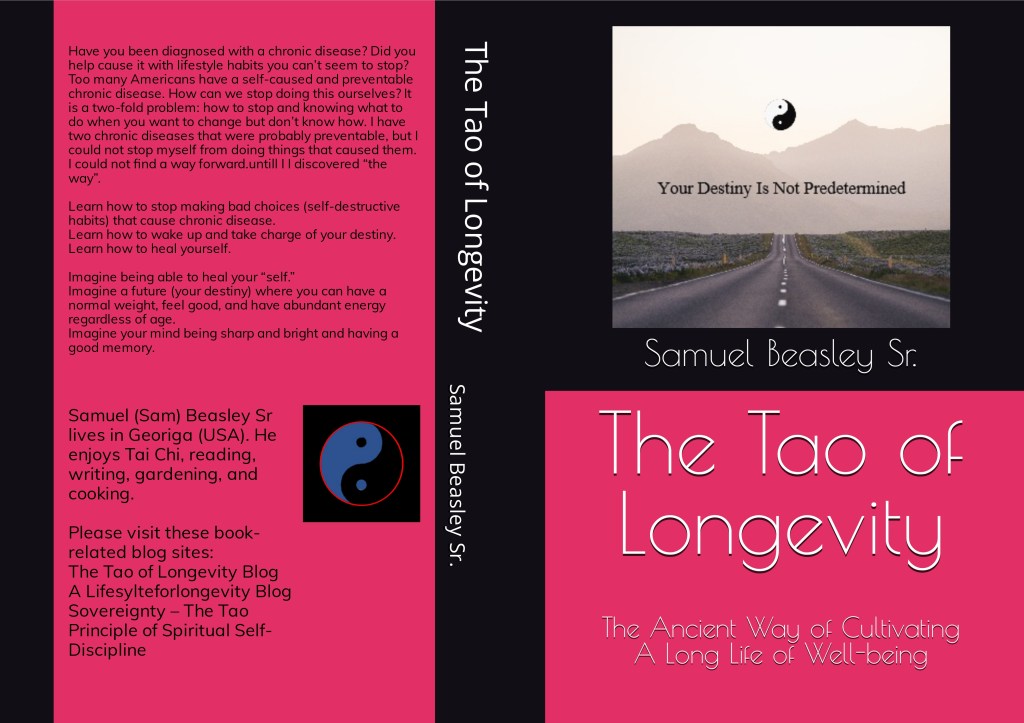
I invite you to read a copy of the book, The Tao of Longevity, which is filled with much more detail than found in this blog series. If you are an Amazon Kindle Unlimited Subscriber, you can get a free copy of the book here.













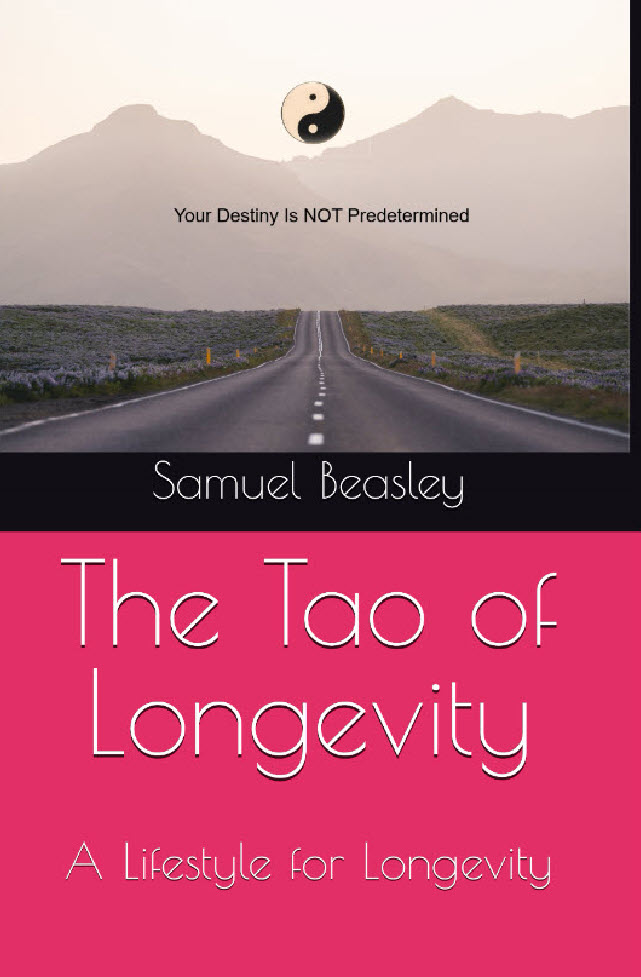
 The Tao of Longevity